

by Sharmila Gautama, Founder, EnglishCoach
As an organization specializing in Business English and Business Communication training, one question that we get asked often in our conversations with clients is: How do we prove the value of training?
Unlike technical or systems-based training, business English programmes rarely show immediate tangible results. You cannot always measure value through certifications and course completion metrics, although these remain important indicators.
Business English programmes often deliver benefits that are less tangible, but no less critical.
Participants in our Business English programmes frequently report:
- Greater confidence in meetings and presentations
- Improved ability to communicate with clients and stakeholders
- Fewer errors in emails, reports, and documentation
- Clearer communication within teams
- Misunderstandings and rework
These outcomes clearly matter to organizations. The challenge lies in making them measurable and credible.
Why Measuring Business English Training Is Difficult
Most organizations are comfortable collecting data at the first two levels of evaluation: reaction and learning. These are typically collected post training in the classroom. A smile sheet and an assessment of knowledge are credible sources of measurement improvement. However, the real challenge begins after the classroom. One is left to wonder if the learning has transferred to application at work.
Moving Beyond Learning: Measuring Application at Work
This brings us to an important question: Are participants using what they learned? Participants in our Business English training confirm that they are:
- Using more structured and concise email formats
- Leading meetings with greater clarity
- Delivering presentations more confidently
- Communicating more effectively with global teams
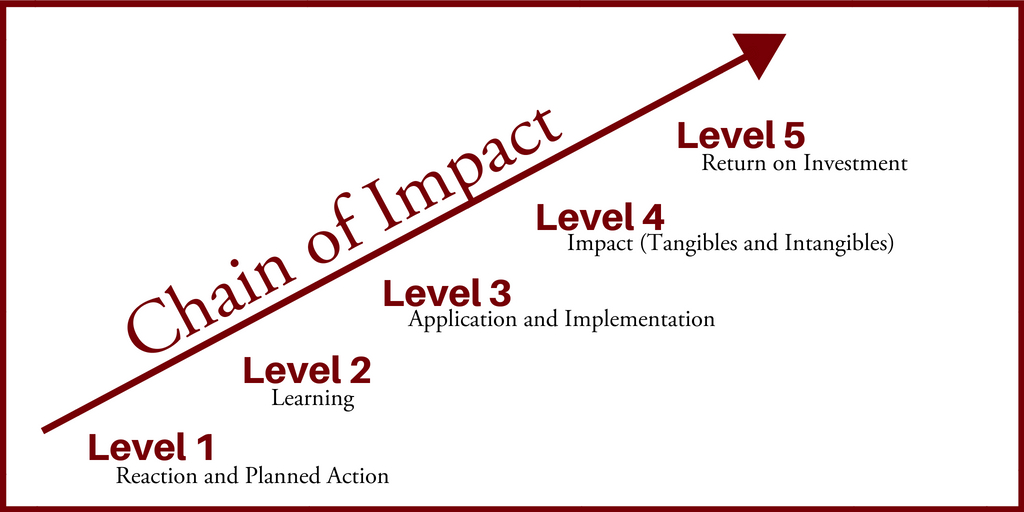
(Image source: ROI Institute)
Measuring application requires input from both participants and their immediate supervisors, as they are best placed to observe behavioural change in the workplace. However, collecting self-reported or manager-reported data must be treated with caution. People tend to over-estimate improvement, especially when they are motivated to show training success.
To address this, the Phillips ROI methodology recommends using a confidence factor to keep results conservative.
For example: A manager may report:
“The participant has improved presentation effectiveness by approximately 20%.”However, when asked:
“How confident are you in this estimate?”They may respond:
“70% confident.”
Rather than taking the full 20% at face value, the Phillips methodology adjusts it based on this confidence level.
Validated Improvement = Estimated Improvement × Confidence Level= 20% × 70% = 14% validated improvement
This results in a more conservative estimate of 14% validated improvement, ensuring that the reported impact reflects what can be stated with reasonable confidence.
Converting Communication Gains into Business Value
The final stage of ROI converts improvements into financial terms. For business English programmes, the most practical conversion is usually time savings or cost avoidance.
Examples include:
1. Reduced rework in written communication
Better emails and reports lead to:
- Fewer corrections
- Fewer approval cycles
- Less time spent clarifying meaning
2. More efficient meetings
Improved spoken communication results in:
- Shorter meetings
- Faster decisions
- Reduced follow-up discussions
3. Stronger presentations
More effective presentations can improve:
- Internal stakeholders buy-in
- Client engagement
- Sales conversion opportunities
These improvements can be translated into hours saved and then converted into cost savings.
For example:
- 30 employees save 30 minutes per week correcting emails
- 0.5 hours × 30 employees × 52 weeks = 780 hours annually
This time can then be converted into cost savings.
Choosing the Right Cost Metric
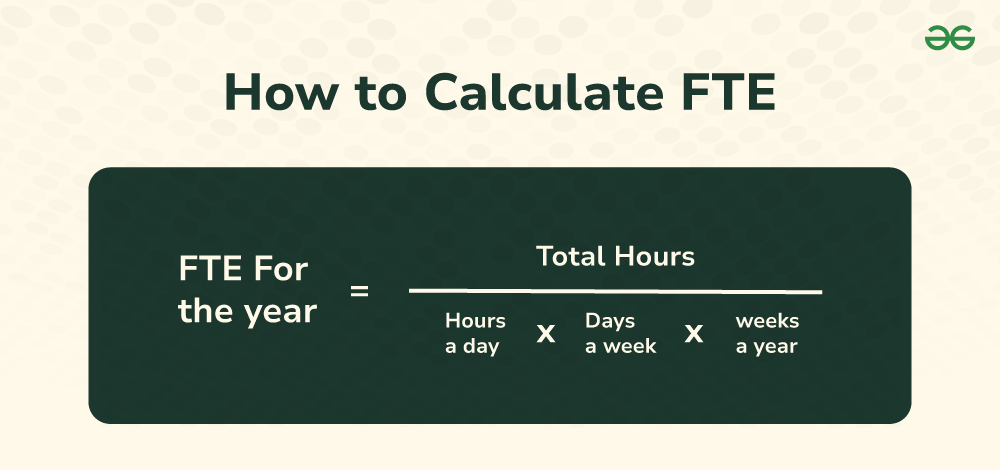
(Image source: GeeksforGeeks)
A common challenge is assigning monetary value to time saved.
In organizations with multiple layers of review and iteration, measuring exact cost reduction can become messy.
This is why many companies prefer using the fully loaded FTE (Full-Time Equivalent) cost, which includes:
- Salary
- Benefits
- Employer taxes
- Overheads
Using this metric provides a more realistic estimate of business value.
Why Customization Makes ROI Easier
One advantage of our Business English programmes is that they are highly customized.
Because each programme is designed for a clearly defined target group, we can establish business objectives upfront.
For example:
- Sales teams: client presentations and negotiation language
- Customer service teams: email clarity and customer-friendly language
- Senior leaders: executive communication and stakeholder influence
This targeted approach makes it easier to:
- Define success metrics early
- Track relevant workplace behaviours
- Measure business impact more meaningfully
Customization strengthens both training relevance and ROI measurement.
The Bigger Lesson
Business English training may appear intangible, but its business impact is very real.
Communication influences:
- Productivity
- Client satisfaction
- Collaboration
- Revenue generation
We know the value exists. The real question is – are we measuring it in a way that does it justice? By applying the Jack J. Phillips framework, organizations can move beyond participant feedback and learning scores to demonstrate real business contribution.
If you’re looking to understand how to apply the Phillips ROI Framework to your learning initiatives, join us for our upcoming webinar on 21 May 2026.
We’ll walk you through the framework in detail and explore how training impact can be measured in a structured and credible way. Register here https://englishcoachservices.com/resources/webinars-events/ to reserve your spot.
To explore how we can support your organisation, write to us at info@englishcoachservices.com or visit our website.